Guide · 13 July 2026 · 4 min read
A weighted pipeline is a promise about behaviour
Stage probabilities are not decoration. They are the firm agreeing what a stage means, and then being held to it.
Two firms can show the same weighted pipeline and mean entirely different things. In one, a pursuit at 60% has a named sponsor, an agreed budget and a submission date. In the other, 60% means a partner feels good about lunch. The number is identical; only one of them is information.
Probabilities are definitions
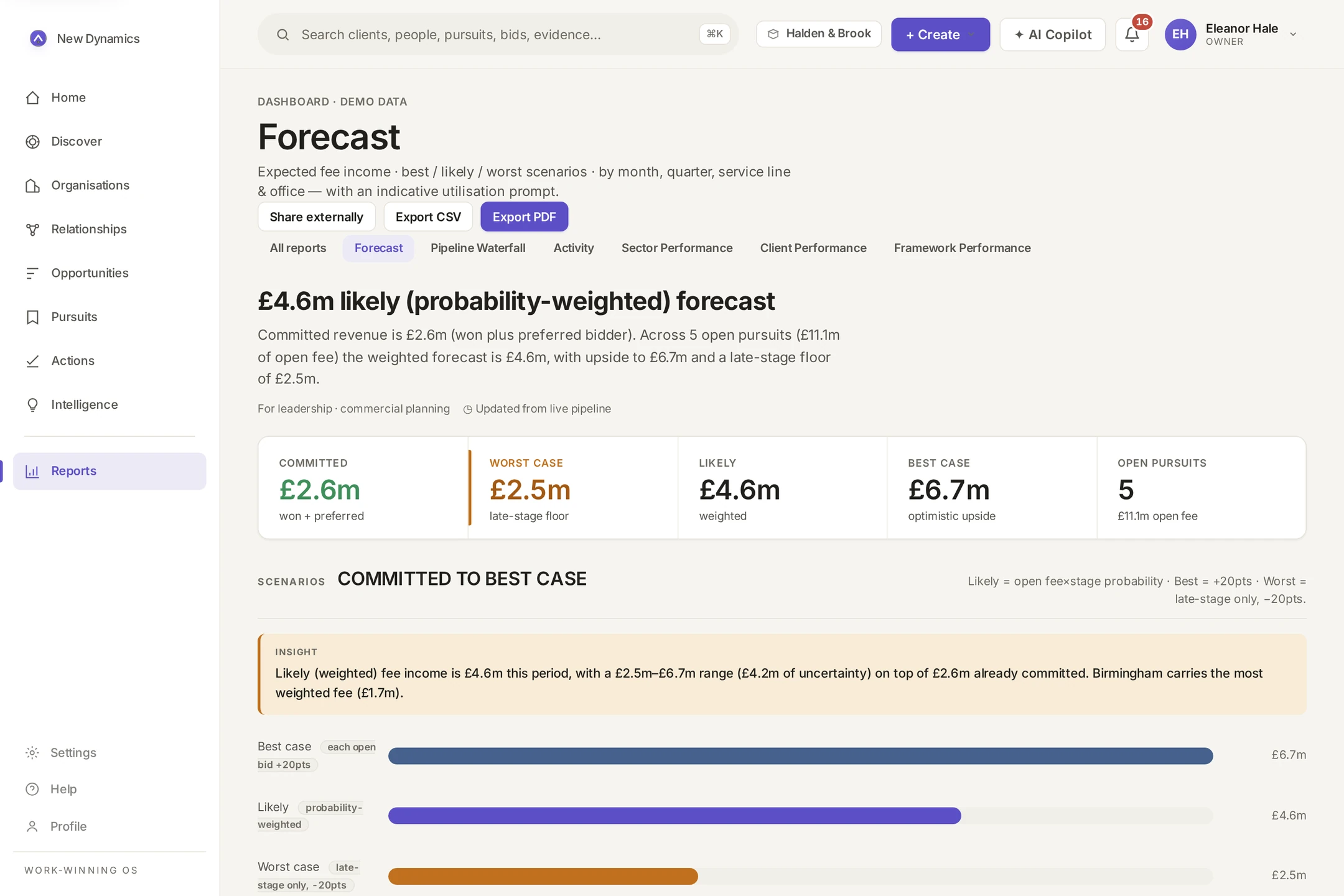
Attach each probability to observable facts: a stage is 40% because the tender has been received and the bid team named, not because someone is optimistic. Then audit occasionally: of everything we ever marked 40%, what fraction actually converted? If the answer is 15%, the stage definition is fiction and the forecast inherits the fiction.
Let the number argue in public
The weighted figure earns trust when anyone can open it, see the pursuits inside it, and challenge a probability with reasons. A forecast defended line by line in the open is worth ten defended by seniority in a meeting. The discipline is not mathematical, it is social: same definitions, visible workings, no private spreadsheets.
If nobody ever argues with your stage probabilities, nobody believes them either.